

bedrock-tax
Replacing OpenSearch Serverless with Aurora x pgvector to cut Bedrock Knowledge Base costs from $700/mo → $50/mo

Table of Contents
-
Problem
Hidden constraint
Approach
Agent-era context
Embedding strategy
Schema
Query pattern
Repo structure
Stack
Contact
Problem
Our AI agent (used for speeding up oncall triage work) was querying a AWS Bedrock Knowledge Base (backed by AWS OpenSearch Serverless):
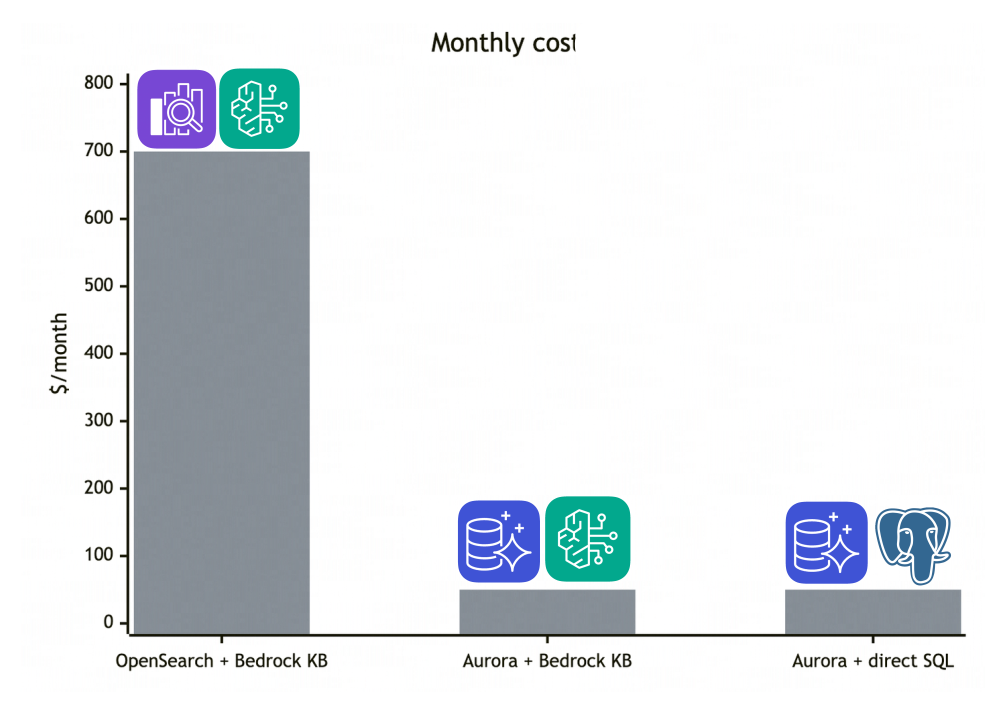
- OpenSearch Serverless requires min 2 OCU (OpenSearch Compute Units) quote
- billed at $350/OCU/month quote
- result → a flat $700/month floor regardless of actual query volume
The KB served ~8,800 documents across three domains:
- documentation: ~7,700 chunks
- compliance rules: ~1,100 rules
- code repo metadata: ~5,600 chunks
Realizing the issue:
- AI agent's underlying Bedrock model was Claude 3.5 Haiku (
claude-3-5-haiku-20241022), which accessed the Knowledge Base thru theBedrock Retrieve APIat $0.00035 per query quote - at human query volumes this per-query cost was negligible- the $700 floor dominated the bill
But agent traffic is NOT human traffic:
- a human triaging a ticket may search the KB ~5 times/hr → skim results → move on
- the agent doing the same triage blasts the KB 20+ times/5 sec- every tool call, often further fanning out into parallel crosswalk lookups across docs, security rules, commit history
- a busy oncall week with just 1,000 agent sessions = 100,000 queries = $35/day in Retrieve fees alone- on top of the $700 floor(!)
Hidden constraint
Bedrock Knowledge Base presents as a single managed service:
ingest docs → call
RetrieveCommand→ results
But under the hood, it decomposes into two meters that are actually decoupled:
| Meter | What | Cost ($) | Alternative | ||
|---|---|---|---|---|---|
 |
Vector store (backend) | OpenSearch Serverless | $700/mo floor | → | Swap backend (Aurora pgvector), keep interface (Bedrock Retrieve API) |
|
Retrieval interface | Bedrock Retrieve API |
$0.00035 x query quote | → | Query backend (vector store) directly via raw SQL |
Core insight: cost floor was attached to the backend (vector store), not to the retrieval interface
Approach
| Step | Date | Changes | Cost impact | % saved | |
|---|---|---|---|---|---|
|
1 | 2025-12-31 |
|
$700/mo → $50/mo | +93% |
 |
2 | 2026-01-29 |
|
$0.00035/q Retrieve quote → $0 Retrieve | +100% |
Migration path:
each step is independent + can be validated before proceeding:
Step 0:
- Bedrock KB on OpenSearch Serverless (~$700/mo)
- Agent + S3 docs →
Retrieve API→ OpenSearch
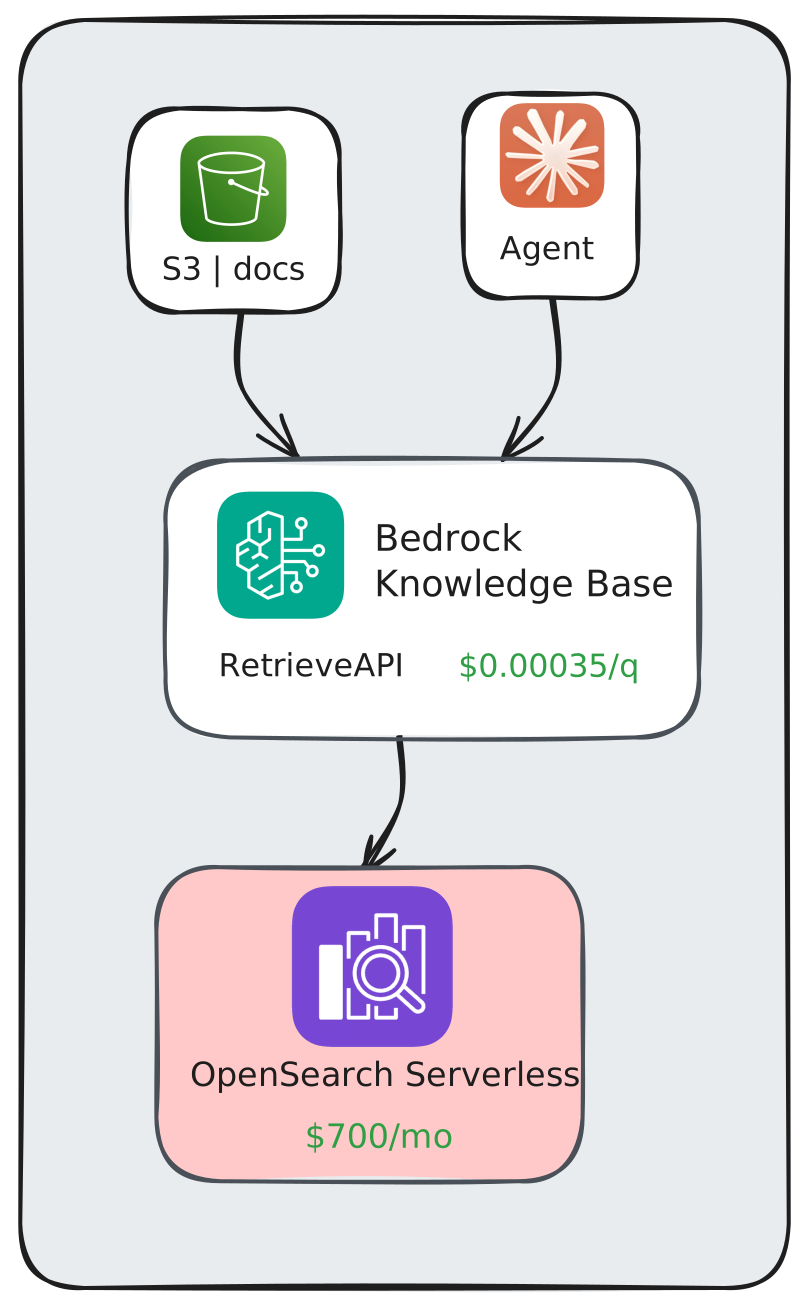
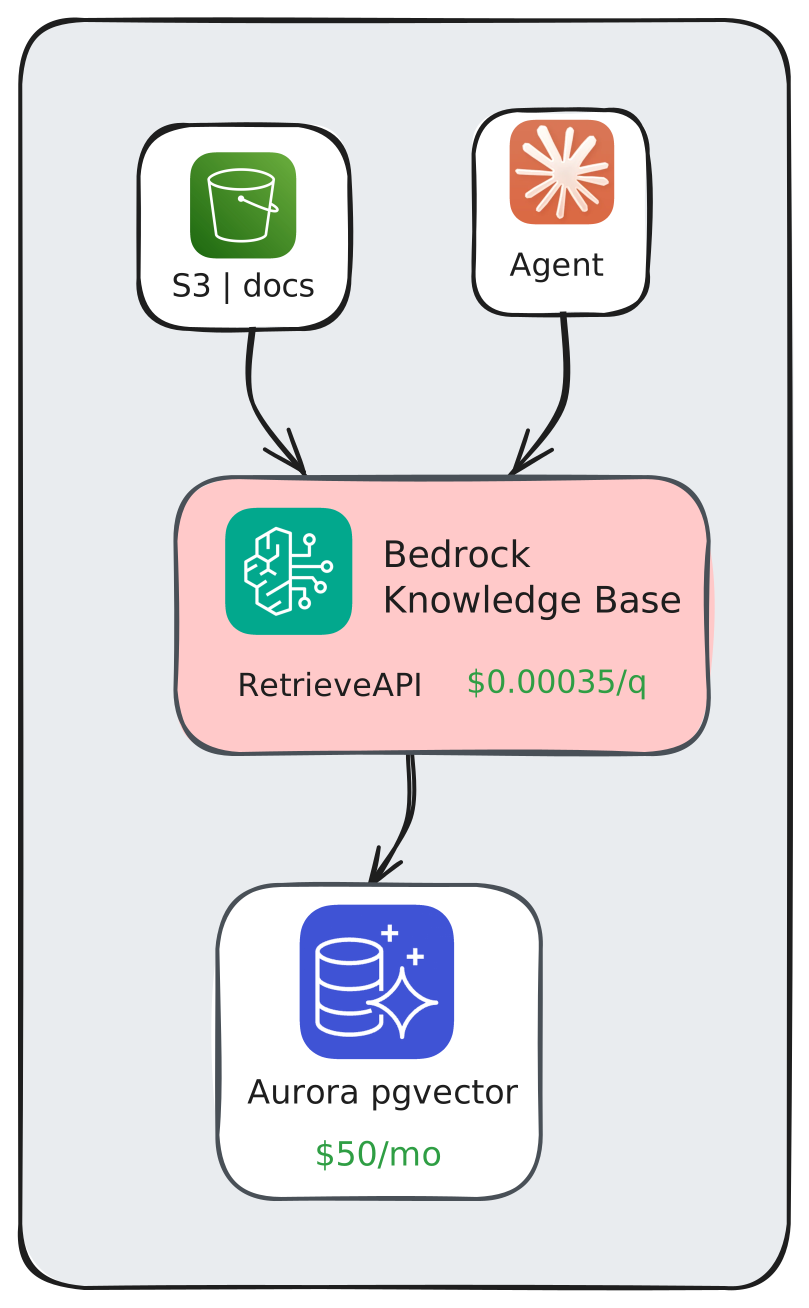
Step 1:
- kept Bedrock KB
Retrieve APIintact- same application code, same KB config, different storage backend - Aurora Serverless v2 runs at ~$50/month and scales to zero ACU on idle quote
- the OpenSearch Serverless floor disappeared immediately
- see
migrations/01_swap_store.sql
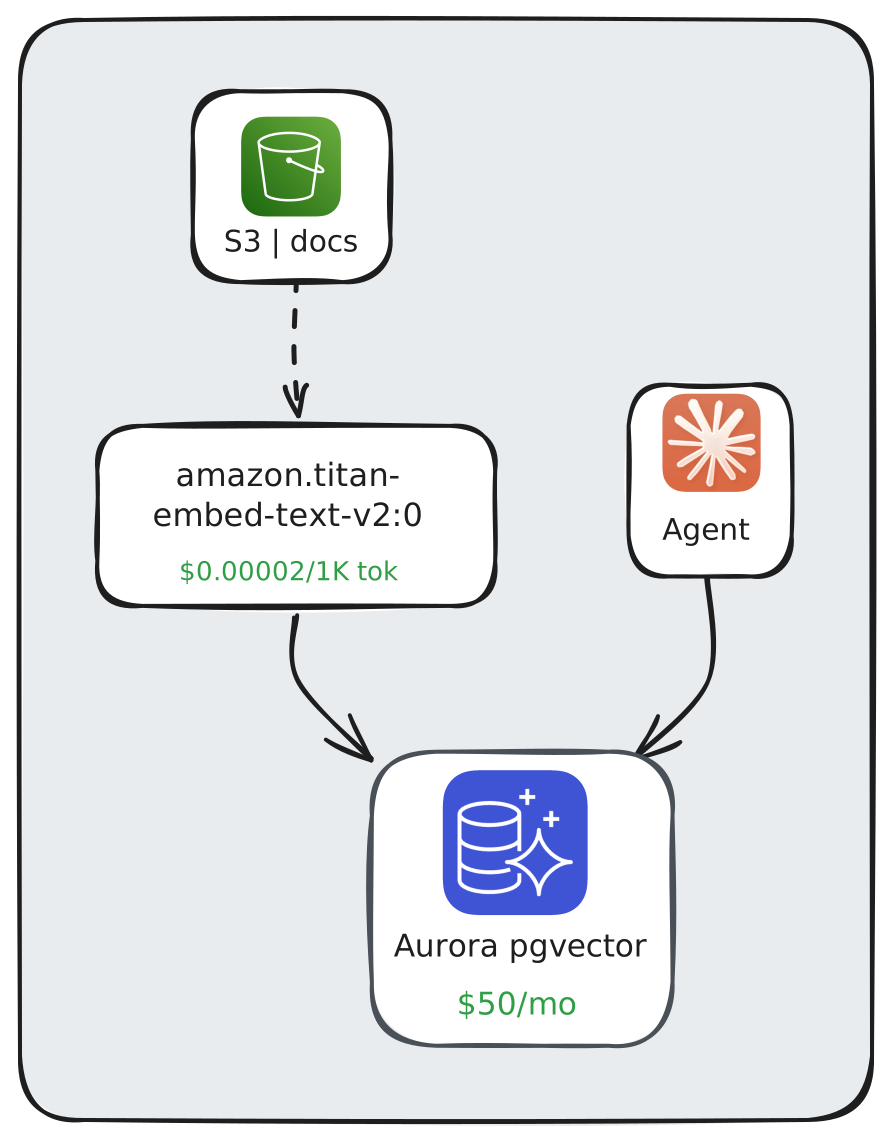
Step 2:
- fully deleted Bedrock KB + dropped
RetrieveCommandfrom the path - the application embeds the query using Titan v2 (
amazon.titan-embed-text-v2:0) → sends embedding as a SQL param → then runs a cosine distance query against Aurora viaExecuteStatementCommand(RDS Data API) - see
migrations/02_kill_wrapper.sql
Figures:
- one-time embedding cost for all
8,800 rows: **$0.20** via Titan v2 - per-query retrieval cost after step 2: $0 (meter gone- you no longer call it)
- left: Titan query embed (~$0.00002/1K tok) quote + the ~$50/mo Aurora floor
Agent-era context
Bedrock's Retrieve API at $0.00035/query quote is priced for human access patterns- a few queries per session, a few sessions per day
Agent traffic operates differently: a single agent session doing RAG against the KB generates retrieval calls at every turn, often multiple per turn:
| Caller | Queries/day | Retrieval cost/day | Retrieval cost/mo |
|---|---|---|---|
| human | ~10 | $0.004 | $0.11 |
| agent (20-turn × 5 KB hits × 100 sessions) | 10,000 | $3.50 | $105 |
| agent (20-turn × 5 KB hits × 1,000 sessions) | 100,000 | $35.00 | $1,050 |
Before step 1, the $700 OpenSearch floor dominated total cost + made the per-query fee invisible After step 1 eliminated the floor, the per-query cost became primary line item and scaled with agent loop depth rather than user count This is what motivated step 2.
Embedding strategy
Model choice
| Embedding model | Dimensions | Cost/1K tok | Notes | |
|---|---|---|---|---|
|
amazon.titan-embed-text-v2:0 ✓ |
256 / 512 / 1024 | $0.00002 quote | native AWS, no cross-region (chosen ✔️) |
 |
cohere.embed-english-v3 |
1024 | $0.0001 quote | 5× more expensive, better MTEB scores |
|
cohere.embed-multilingual-v3 |
1024 | $0.0001 quote | multilingual support not needed |
Titan v2 chosen over Cohere for cost:
- at ~8,800 documents the quality difference between Titan and Cohere is negligible for documentation search
- docs are technical English, queries are technical English, and recall difference does not justify 5× embedding cost
- both models available in native Bedrock
Configuration:
- Titan v2: 1024 dimensions (maximum), normalization enabled quote
- at <10K vectors, the storage overhead of 1024d vs 512d vs 256d is trivial (~30MB total)
- higher dimensionality provides better recall on semantic search without any meaningful cost to index build time or query latency at this scale
Chunking
Previous Bedrock KB setup used hierarchical chunking (built into its managed ingestion pipeline) quote:
| Parameter | Value |
|---|---|
| strategy | HIERARCHICAL |
| level 1 (parent) | 1,500 tokens |
| level 2 (child) | 300 tokens |
| overlap | 60 tokens |
After deleting Bedrock KB (step 2), managed chunking pipeline no longer exists:
- documents now stored as pre-chunked units
- upstream document preparation process produces chunks before they reach embedding stage
- ingest script caps each chunk at 8,000 characters (Titan v2 input limit) quote + embeds full chunk as a single vector
Tradeoff:
- simpler strategy than hierarchical chunking
- but it shifts chunking responsibility upstream
- for this corpus (documentation pages, rule descriptions, code metadata), the source documents were already naturally segmented into page-sized units, so loss of hierarchical retrieval was not impactful
What gets embedded vs what doesn't
Not every table has embeddings- decision depends on whether data needs semantic search or whether structured/equality lookups are sufficient:
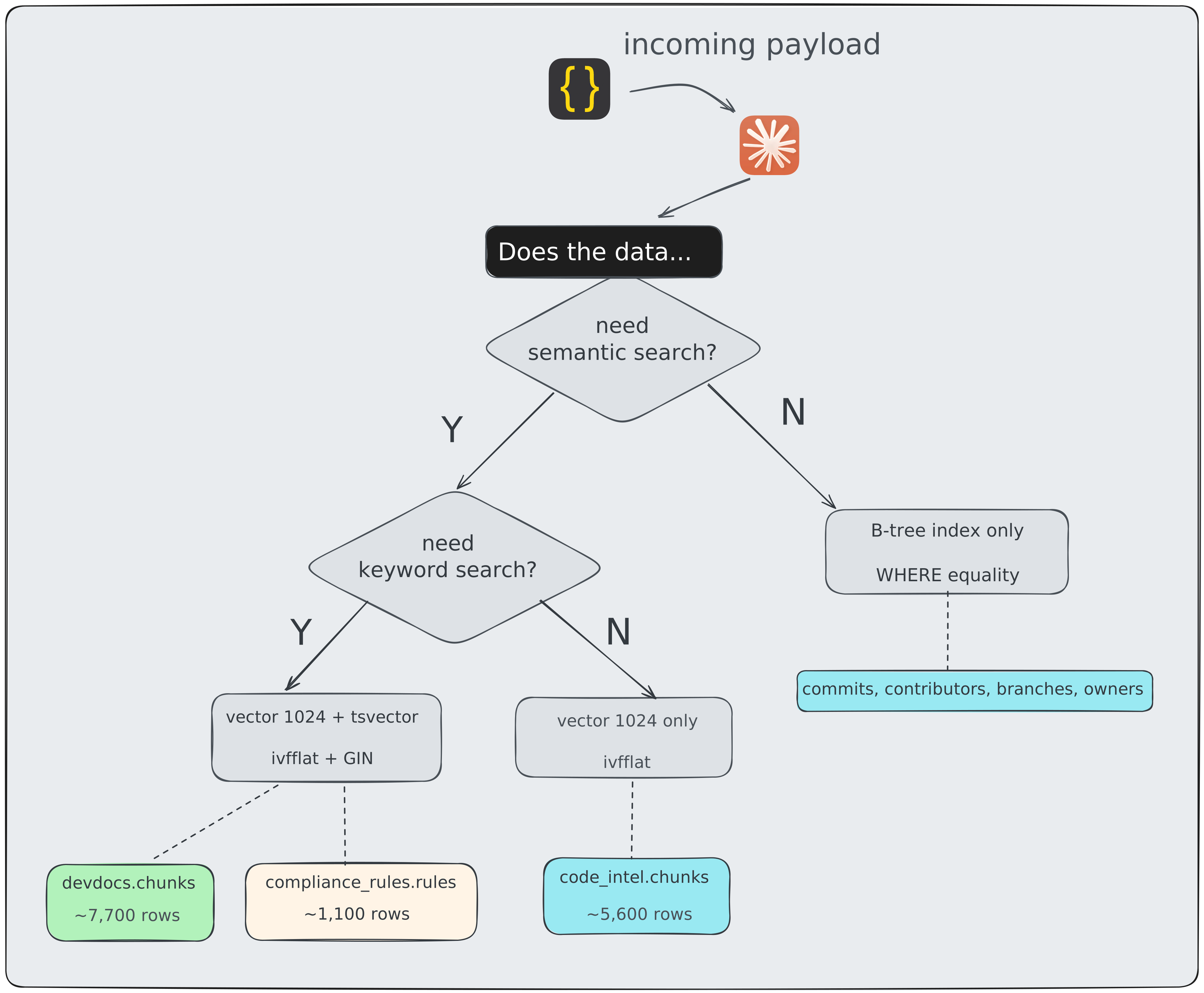
| Table | Rows | Embedded | FTS | Why |
|---|---|---|---|---|
devdocs.chunks |
~7,700 | ✓ vector(1024) | ✓ tsvector | documentation- needs semantic + keyword search |
compliance_rules.rules |
~1,100 | ✓ vector(1024) | ✓ tsvector | rule descriptions- needs semantic + keyword search |
security_rules.owners |
~120 | ✗ | ✗ | structured metadata- queried by team_id, name (equality) |
code_intel.chunks |
~5,600 | ✓ vector(1024) | ✗ | code context- needs semantic search, not keyword |
code_intel.commits |
~7,900 | ✗ | ✗ | structured- queried by author, date range |
code_intel.contributors |
~900 | ✗ | ✗ | structured- queried by name, email |
code_intel.branches |
~600 | ✗ | ✗ | structured- queried by branch name |
Embedding every row would cost ~$0.50 instead of ~$0.20 and would add no value- you don't semantic-search a branch name or a contributor email
- structured tables use B-tree indexes and
WHEREequality filters
Dual-field pattern: vector + tsvector on the same row
Tables that need both semantic + keyword search carry both fields on every row:
embedding   vector(1024),
searchable  tsvector GENERATED ALWAYS AS (
  to_tsvector('english', coalesce(title, '') || ' ' || coalesce(text, ''))
) STORED,
The GENERATED ALWAYS column means the tsvector updates automatically on INSERT/UPDATE with zero application-side maintenance
the alternative- a separate FTS table or a separate indexing pipeline- adds operational complexity for no performance benefit at this scale
Distance metric: cosine over L2
Previous OpenSearch setup: HNSW with FAISS engine and L2 (Euclidean) distance
Aurora setup: ivfflat with cosine distance (vector_cosine_ops, <=> operator)
Cosine distance is better choice for normalized text embeddings:
- Titan v2 outputs are L2-normalized by default (
normalize: true) quote - which means cosine distance and inner product distance are equivalent
- but cosine is more interpretable- similarity scores range from 0 to 1
RDS Data API constraints
- RDS Data API (
ExecuteStatementCommand) has a 1 MB response size limit quote - hence why query templates use
LEFT(text, 500)orLEFT(text, 1000)instead of returning full document content- at ~7,700 rows averaging several KB each, an unbounded SELECT could exceed the limit - the agent retrieves previews first → then fetches full content for specific rows if needed
- Data API is also HTTP-based and stateless quote:
- no persistent database connections ✔️
- no connection pool to manage ✔️
- no VPC peering required ✔️
- this matters for serverless compute (ECS Fargate, Lambda) where connection pooling is operationally expensive and connection leaks cause production incidents
Schema
cluster: Aurora Serverless v2, PostgreSQL 16.4, pgvector 0.7.3
access:  RDS Data API (ExecuteStatementCommand, HTTP- no connection pool)
embed:   amazon.titan-embed-text-v2:0, 1024 dimensions
Full DDL: schema.sql
| schema | table | rows | embedding | fts | indexes |
|---|---|---|---|---|---|
devdocs |
chunks |
~7,700 | vector(1024) |
tsvector |
ivfflat, GIN, B-tree(tool, doc_set) |
security_rules |
rules |
~1,100 | vector(1024) |
tsvector |
ivfflat, GIN, B-tree(severity, state) |
security_rules |
owners |
~120 | n/a | n/a | n/a |
code_intel |
chunks |
~5,600 | vector(1024) |
n/a | ivfflat |
code_intel |
commits |
~7,900 | n/a | n/a | n/a |
code_intel |
contributors |
~900 | n/a | n/a | n/a |
code_intel |
branches |
~600 | n/a | n/a | n/a |
Index strategy:
- ivfflat over HNSW for vector search:
- with <10K vectors per table, ivfflat builds faster + uses less memory
- HNSW only becomes worthwhile >100K+ rows
- GIN on
searchablecolumn- supports full-text search viatsvector @@ tsquery - B-tree on structured columns (
tool,doc_set,severity,state)- for WHERE equality filters, not vector math - every embedded row carries both
vector(1024)and atsvector GENERATED ALWAYScolumn- semantic search and full-text search operate on the same row without needing a separate table or a separate indexing pipeline
Query pattern
Agent uses a dumb orchestrator pattern:
- LLM reads registry of pre-built deterministic SQL templates → picks appropriate one → fills in param slots
- scopes agentic decision plane down to a router-like decision tree
- it does not handroll (i.e. generate freestyle SQL)
- this drastically minimizes hallucination risks (see skills-not-mcp for why I chose this)
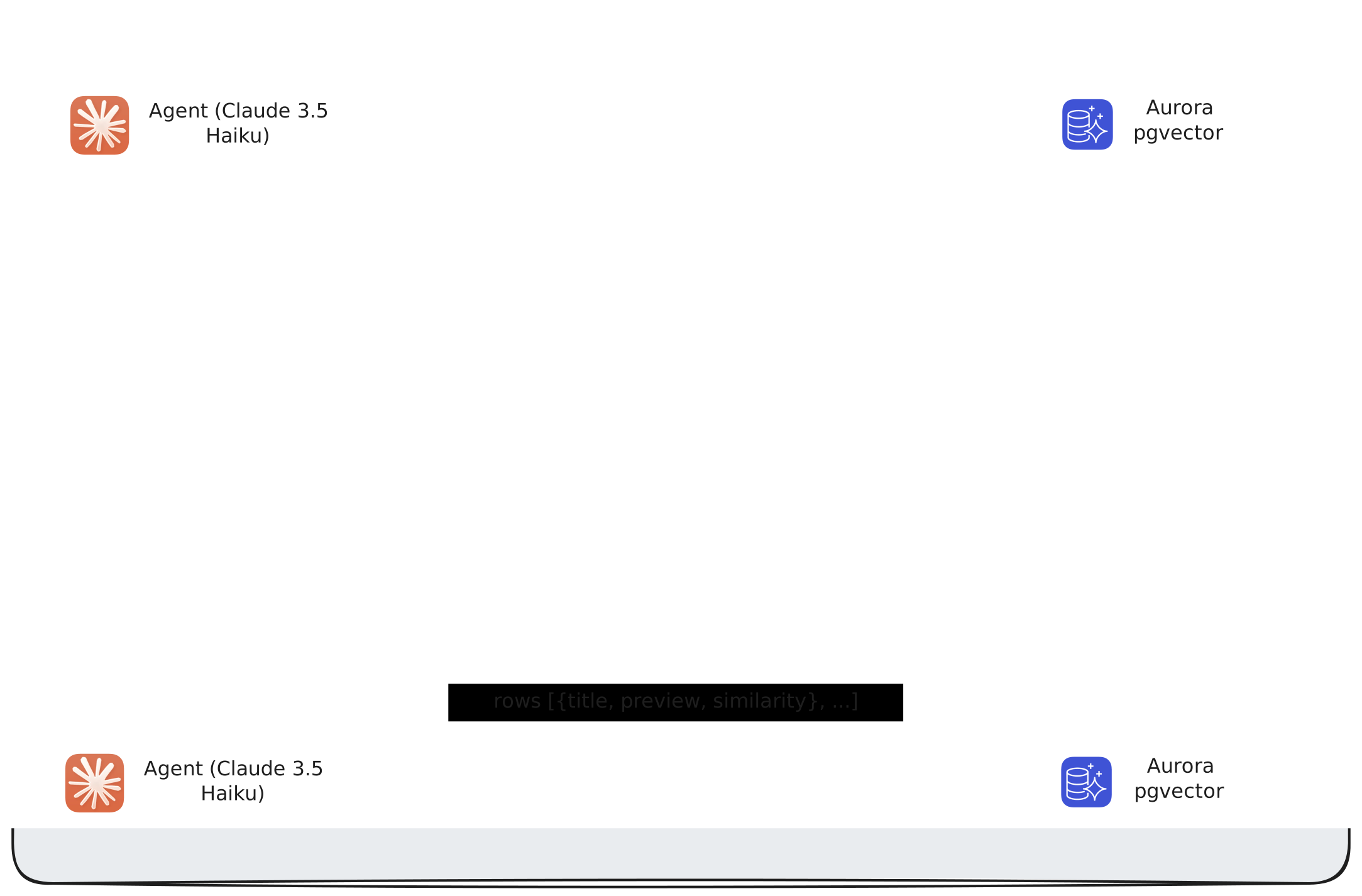
Available templates:
-- by_tool
SELECT id, title, doc_set, LEFT(text, 500), url
FROM devdocs.chunks WHERE tool = '{tool}' LIMIT {limit}

-- by_doc_set
SELECT id, tool, title, LEFT(text, 500), url
FROM devdocs.chunks WHERE doc_set = '{doc_set}' LIMIT {limit}

-- fulltext_search
SELECT tool, title, LEFT(text, 500), url
FROM devdocs.chunks WHERE searchable @@ to_tsquery('english', '{terms}') LIMIT {limit}

-- semantic_search
SELECT tool, doc_set, title, LEFT(text, 1000), url,
       ROUND((1 - (embedding <=> $vec::vector))::numeric, 3) as similarity
FROM devdocs.chunks ORDER BY embedding <=> $vec::vector LIMIT {limit}
Three search modes on the same table, same indexes- the agent routes the mode based on the query:
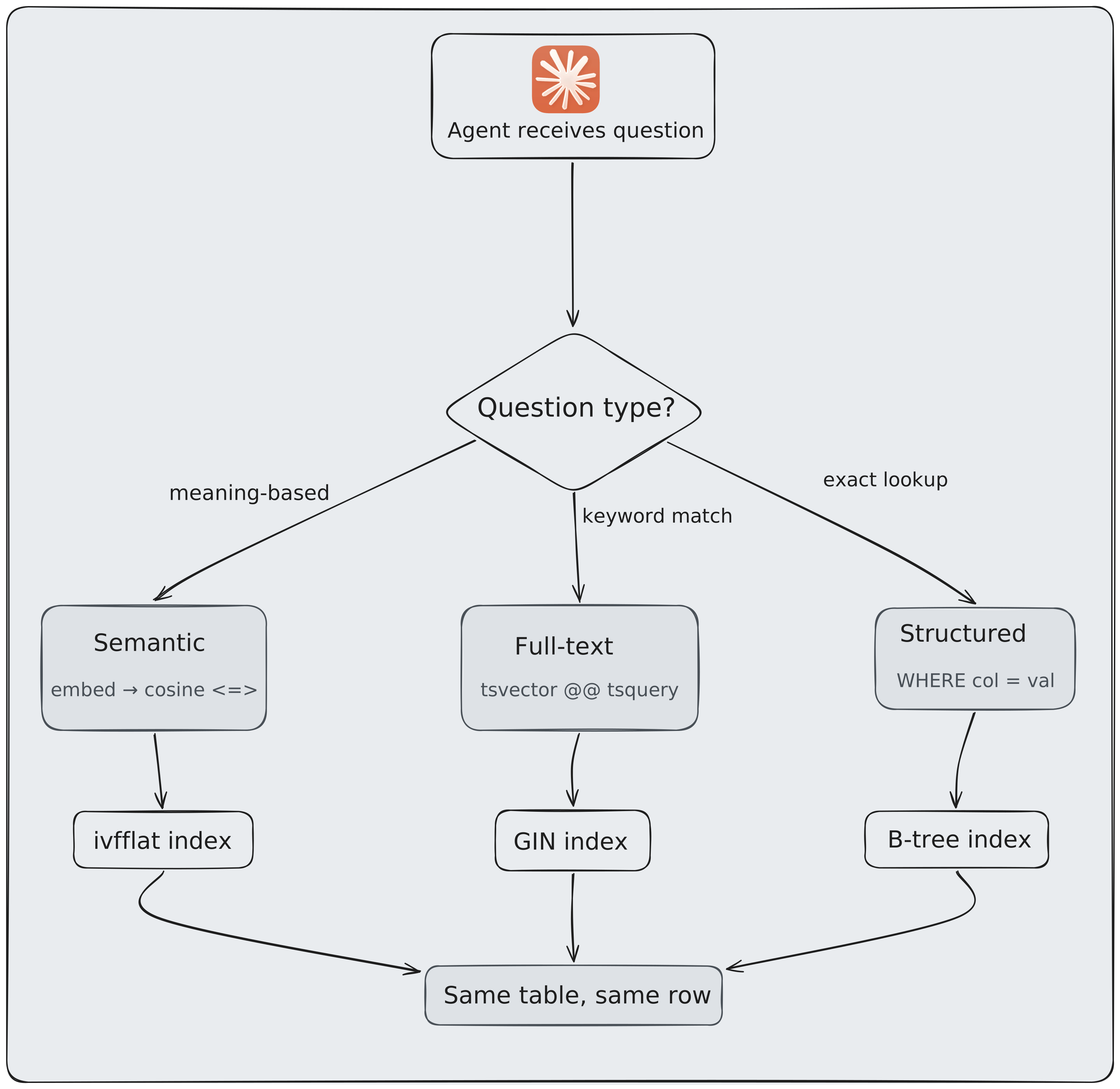
| Mode | Mechanism | Index | Example |
|---|---|---|---|
| semantic | cosine distance (<=>) |
ivfflat | "how do I deploy with CDK?" |
| fulltext | tsvector @@ tsquery |
GIN | "lambda cold start" |
| structured | WHERE equality | B-tree | tool = 'cdk', severity = 'CRITICAL' |
Repo structure
bedrock-tax/
├── schema.sql                  # full DDL- three schemas, pgvector, ivfflat, tsvector
├── migrations/
│   ├── 01_swap_store.sql       # step 1: OpenSearch Serverless → Aurora pgvector
│   └── 02_kill_wrapper.sql     # step 2: delete Bedrock KB, go direct SQL
├── query_data_api.py           # query via RDS Data API (prod pattern)
├── ingest_data_api.py          # ingest + embed via RDS Data API
├── query.py                    # query via psycopg (alternative, needs DATABASE_URL)
├── ingest.py                   # ingest + embed via psycopg (alternative)
├── example/
│   └── sample_docs.jsonl       # 10 sample docs to test ingest + query
├── setup.md                    # Aurora cluster creation, IAM, migration guide
├── .env.example                # required env vars (CLUSTER_ARN, SECRET_ARN, etc.)
├── requirements.txt            # boto3, psycopg, pgvector
└── README.md
The *_data_api.py scripts are the primary interface:
- they use
ExecuteStatementCommand(RDS Data API, which is how the production agent queries Aurora, post KB-deletion) - no VPC, no connection pool, no psycopg
query.py/ingest.pyscripts are psycopg alternatives for environments with direct PostgreSQL access (e.g., viapsqlor VPC-connected client)
Stack
| component | detail | |
|---|---|---|
|
Aurora Serverless v2 | PostgreSQL 16.4, pgvector 0.7.3 |
|
Titan Embed v2 | amazon.titan-embed-text-v2:0, 1024 dimensions |
|
RDS Data API | ExecuteStatementCommand, HTTP, no connection pool |
 |
Python | boto3, psycopg, pgvector |
 |
S3 | document source- raw docs ingested from here |
|
OpenSearch Serverless | replaced- was the $700/mo floor |
Model hierarchy (agent runtime):
| Role | Model | Note | |
|---|---|---|---|
 |
primary | claude-3-5-haiku-20241022 |
tool routing and synthesis |
|
delegate | claude-3-haiku-20240307 |
sub-task execution |
|
embedding | amazon.titan-embed-text-v2:0 |
1024 dimensions, $0.00002/1K tokens quote |
Contact